
If you can't see the images below, please click here
| The AAC-RERC is dedicated to the support and development of |
We are pleased to announce the availability of the following webcasts. All webcasts are free, viewable on any internet browser, and feature nationally recognized experts on communication and assistive technology. We hope you find these materials useful with pre-service educators or graduate students who will work with individuals with limited or no speech. |
| After viewing this webcast, students will be able to ...
|
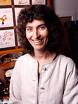 |
AAC Interventions to Maximize Language Development for Young Children |
|
| Janice Light (Penn State University) describes the components of effective interventions for young children who use augmentative and alternative communication. (81 minutes) | ||
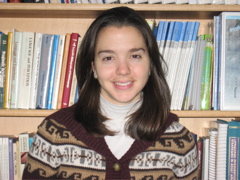 |
Seating and Positioning for Individuals who use Assistive Technology |
|
| Aileen Costigan (Penn State University) describes key issues in seating and positioning for individuals who use assistive technology. (47 minutes) | ||
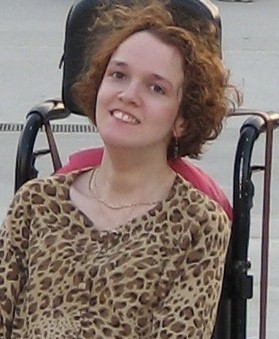 |
AAC and College Life: Just Do It! |
|
| Beth Anne Luciani (California University of Pennsylvania) describes her academic experiences, and the benefits and the challenges of college life for individuals who use AAC. (22 minutes) | ||
|
Maximizing the Literacy Skills of Individuals who Require AAC |
|
| Janice Light (Penn State University) describes the components of effective literacy interventions for individuals who require AAC. (106 minutes) | ||
 |
How Far We've Come, How Far We've Got to Go: Tales from the Trenches |
|
| Michael Williams, a long time practitioner of the art of augmented communication, uses his life story to help illustrate many of the key social and technological issues in AAC today | ||
 |
Overview of the Health-based Funding Programs that Cover Speech Generating Devices |
|
| Lew Golinker (AT Law Center) provides an overview of funding issues in AAC. (66 minutes) | ||
 |
Visual Immersion Program (VIP) for Individuals with Autism |
|
| Howard Shane and Meghan O'Brien (Children's Hospital Boston) discuss their research on the development of the Visual Immersion Program to teach language concepts to individuals with autism. (62 minutes) | ||
We hope you find this information useful in working with special education, early childhood education, and general education pre-service teachers, as well as graduate students.
Could you please forward this message to any faculty member that you think may be interested in this content.
Thank you, please let me know if you have any sugestions for the development of these educational materials.
David McNaughton
Special Education
The Pennsylvania State University
DBM2@PSU.EDU
If you wish to be removed from this mailing list, please hit "reply" and type "remove" in the subject line
This is a publication of the Communication Enhancement Rehabilitation Engineering Research Center (AAC-RERC), which is funded by the National Institute on Disability and Rehabilitation Research of the U.S. Department of Education under grant number H133E030018. The opinions contained in this publication are those of the grantee and do not necessarily reflect those of the Department of Education.
http://mcn.ed.psu.edu/dbm/educator_e_blast/educator_1.html